Finances
The year 2025 marked the first year of the new main rail network concession, and my first full year as CFRO.
Now that year has come to an end, I can tentatively say that I am not dissatisfied. For the first time since 2019, the underlying operating result was slightly positive. Although we are on the right track, we are not there yet.
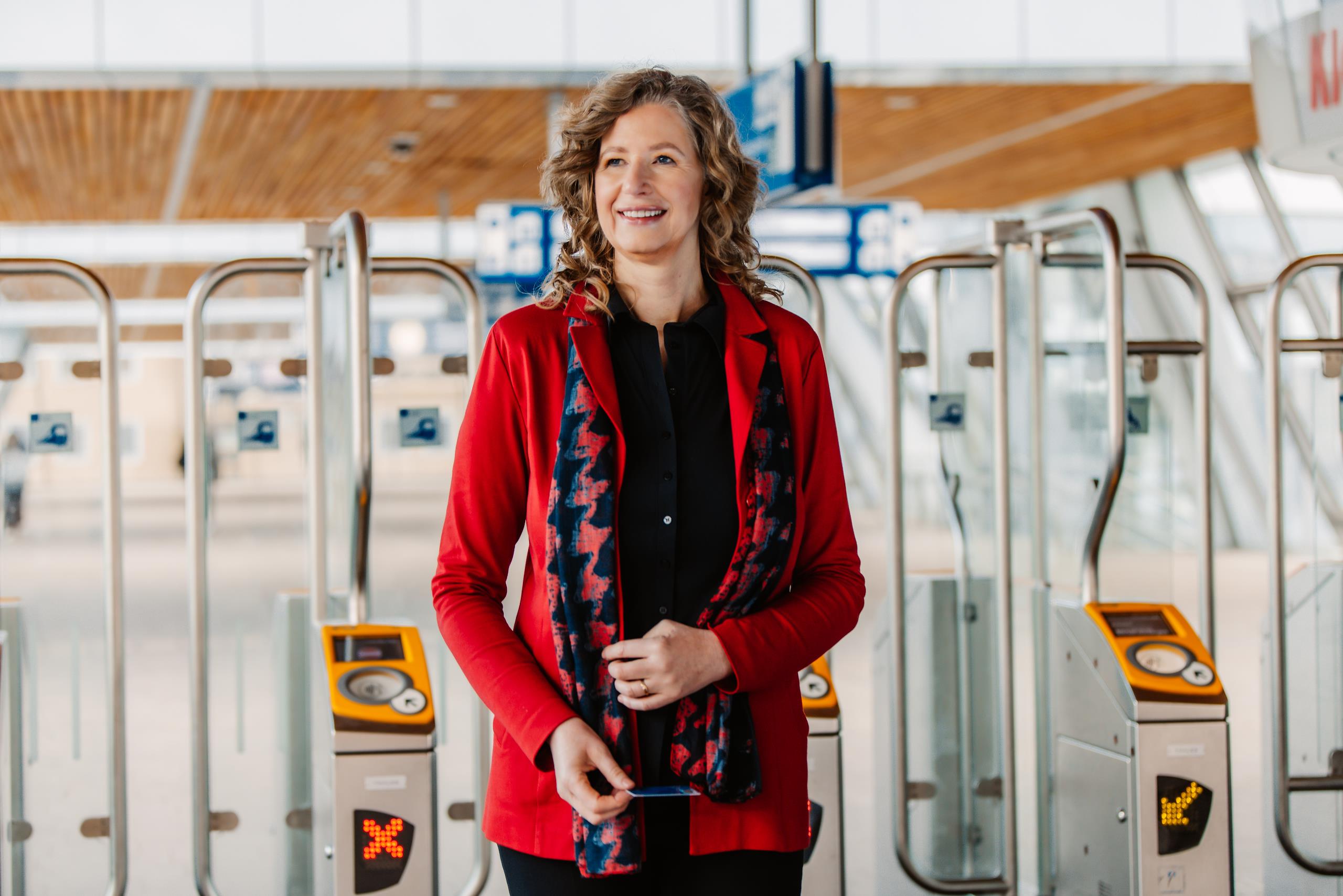
What we badly need are healthy long-term results. We need to meet our repayment obligations and return requirements to continue investing in the things our passengers need. For example, we decided in 2025 to buy new trains – a substantial investment in the future. It is also important to us that train travel is affordable. That's why we need to keep growing and we will be focusing heavily on this in the coming years. We expect to welcome more passengers on our trains. In short: we are seeking a balance between providing a good service now, investing in the future and keeping the organisation financially sound.
We have been extremely strict when it comes to costs. Our cost-savings programme is robust: it is ongoing and we will continue it in the coming years. It has to be done. After several bad years, we have a modest positive operating result if you exclude exceptional costs. Our costs have gone up. Our debt has soared, particularly during the pandemic, and rising interest charges represent a significant burden.
Our passengers, our shareholder and our contracting authority can count on us to carefully consider every expenditure. The result for 2025 is encouraging and emphasises that our efforts are making an impact. At the same time, we realise that there is still plenty of work to be done to give an even stronger financial footing.
Angelique Magielse, Finance & Risk Director
Underlying result from operating activities is improving but is not yet enough to ensure a financially healthy NS
The statement below is a different format from the income statement as reported in the financial statements. Revenue and operating expenses have been adjusted for exceptional items[1], which are specified in the reconciliation to result before income tax as reported in the financial statements. For the regular format of the income statement, see the financial statements.
|
Income statement (alternative format) |
||
|
(in millions of euros) |
2025 |
2024 |
|
Train-related transport |
3,364 |
3,178 |
|
Station development and operation |
556 |
520 |
|
Revenue |
3,920 |
3,698 |
|
Personnel costs |
1,782 |
1,723 |
|
Depreciation charges |
434 |
490 |
|
Cost of raw materials and consumables |
390 |
329 |
|
Own capitalised production |
-60 |
-63 |
|
Costs of subcontracted work and other external costs |
513 |
487 |
|
Infrastructure levies and franchise fees |
462 |
533 |
|
Other operating expenses |
386 |
342 |
|
Operating expenses |
3,908 |
3,841 |
|
Share in result of investments (accounted for according to the equity method) |
-1 |
2 |
|
Underlying result from operating activities |
11 |
-141 |
|
Finance income |
32 |
60 |
|
Finance expense |
-60 |
-30 |
|
Net financing result |
-28 |
30 |
|
Underlying result before income tax |
-17 |
-111 |
|
Impact on the result impairments |
582 |
23 |
|
Provision for the heavy work scheme |
-178 |
- |
|
Miscellaneous |
45 |
-30 |
|
Effect of exceptional items |
449 |
-7 |
|
Result before income tax |
432 |
-118 |
|
Income tax |
-54 |
-6 |
|
Result from discontinued operations, after tax |
2 |
-17 |
|
Result for the reporting period |
380 |
-141 |
In 2025, NS had an underlying result from operations[1] of €11 million (2024: -€141 million). While this is a significant improvement compared with 2024, it remains insufficient to ensure NS's financial health. Further improvement is needed to reduce the sharply increased debt position (and interest expenses) due to losses and investments in recent years.
Increased revenue
Revenue from passenger transport increased by 6% to €3,364 billion (2024: €3,178 billion) and revenue from Stations increased by 7% to €556 million (2024: €520 million).
The number of passenger kilometres within the main rail network concession increased by 2.9% in 2025 compared to 2024, adjusted for the effects of the strikes and the leap year. However, the level remains below the level in 2019 (the last year before the COVID-19 pandemic) mainly due to the continuation of working from home. The number of domestic passenger kilometres in 2025 compared to 2019 were 93% (2024: 92%).
NS also experienced loss of revenue (and additional costs) in 2025 as a result of external factors such as infrastructure problems due to works and disruptions.
Limited increase in operating expenses
Excluding non-recurring and exceptional accounting items, operating expenses were €3,908 million (2024: €3,841 million). This is comparable to the number in 2024. Operating expenses increased only slightly, partly due to the implementation of the cost-savings programme. This is despite NS's prioritisation of operational performance by taking measures such as expanding the timetable and ensuring sufficient colleagues and rolling stock to implement the timetable in a robust manner.
Costs rose in a number of areas in 2025, including personnel and energy. Personnel costs, which are by far the largest cost item, increased by 3% to €1,782 million (2024: €1,723 million). The increase was driven by pay rises and more internal staff at NS. The number of internal staff at NS increased by 3% on average to 13,470 FTEs at year end (2024: 13,234 FTEs). In contrast, the number of external staff decreased by 3% on average due to cost-cutting measures to 6,482 FTEs at year end (2024: 6,683 FTEs). Energy costs in areas including trains and accommodation rose 28% to €202 million (2024: €158 million), mainly due to increased prices.
The cost of infrastructure levies and concession fee was €462 million (2024: €533 million). The decrease is explained by a transition in the new main rail network concession from a concession fee payable of €86 million to a concession subsidy receivable of €13 million.
Sharp increase in net financing expenses
The net finance income was a negative amount of €28 million (2024: €30 million). NS has substantial financing expenses because of its high debt position due to losses and investments in recent years. The financing expenses were €81 million (2024: €77 million). Of these financing expenses, €21 million (2024: €47 million) in construction period interest has been capitalised on the balance sheet, leaving a net financing expense of €60 million (2024: €30 million).
Substantial impact on the result impairment and heavy work scheme
In 2020, NS recognised an impairment of the non-current main rail network assets due to the impact of the COVID-19 pandemic on NS. The impairment was mainly due to the limited expected earning capacity compared to the market rate of return. Impairment is reassessed annually based on forecasts. In 2025, revaluation resulted in a reversal of impairment amounting to €582 million (2024: €23 million). This amount consists of a revaluation at the end of 2025 of €468 million and a lower depreciation charge for 2025 of €114 million. A substantial part of this reversal was due to a change in the estimated service life of some of the rolling stock from 20 to 30 years. Although impairment and its reassessment have a substantial impact on the result, it is essentially only an accounting item that follows from applying the IFRS reporting standards. If the main rail network contract is continued, the impairment will have no impact on revenue and expenditure and thus on NS's financial position. More on that in the next section.
NS agreed a new heavy work scheme in the 2025 collective labour agreement, which allows employees who have worked under tough conditions, such as irregular hours and aggression, to retire up to three years before their state pension age and receive an allowance. A provision of €188 million was made in 2025 for the retrospective rights accrued. The payments will be made in the coming decades. A total of €178 million of the accrual was classed as exceptional and taken out of the underlying result. This is the part that effectively relates to accrual in previous years if the scheme had been introduced earlier.
Taking into account exceptional items, the reported result before income tax in 2025 was €432 million (2024: -€118 million). Combined with income tax of -€54 million (2024: -€6 million) and profit from discontinued operations after tax of €2 million (2024: -€17 million), the result is a net profit of €380 million (2024: -€141 million).
Visible improvement in operating income
In addition to the accounting results, a number of indicators relating to cash flow are presented below. The following charts show NS's operating income[2], capital expenditure[3] plus the balance and related long-term development of its net debt position[4] in recent years.
Operating income was €342 million (2024: €246 million). In 2025, NS invested heavily again to the sum of €300 million (2024: €483 million), mainly in purchasing new trains and upgrading existing trains. NS has continued to make substantial investments in recent years, despite low operating income that was only partly offset by government support measures due to the COVID-19 pandemic. The net debt has therefore risen to €1,216 million (2024: €1,093 million). The increase in the debt position in recent years was partly foreseen given the extensive investment programme, but turned out considerably higher due to the COVID-19 pandemic. The net debt position resulted in €61 million (2024: €36 million) of net interest expenditure in 2025. If NS is to continue investing in mobility for the future and serving the public interest, it is important to continue to improve operating income.
Standard & Poor’s (S&P) is an independent credit rating agency that has assessed NS Groep N.V.’s creditworthiness for quite a few years now. A key indicator is the ratio of variants of operating income to net debt indicators. The fact that the Dutch State is the shareholder of NS is a positive factor in S&P’s assessment of our creditworthiness. In the most recent assessment (July 2025), the rating was an A with a stable outlook, unchanged from the assessment in June 2024.
Looking ahead
NS spent more money than it earned in the years after the pandemic, due to a persistent drop in passenger numbers and rising costs in areas such as infrastructure, energy and staff, as well as heavy investment in things like new trains and upgrading trains. Yet the situation has improved a little as each year has passed since the pandemic. This has been achieved through tight cost control and new measures to increase revenue. We are working on a cost savings programme of €200 million a year, of which around €60 million has now been realised. One of the ways we are doing this is by moving towards a smaller head office (fewer external staff), reducing consultancy costs and saving on IT. Smarter scheduling of rolling stock will save maintenance costs and eventually lead to fewer rolling stock orders. At the same time, we are working to increase revenue by encouraging more passengers to travel more frequently, particularly during off-peak times, and by actively pursuing further growth in the business market. The measures we have taken to achieve this include expanding NS Price Time Deals, improving connections, and marketing campaigns aimed at spreading passenger flows. In recent years, rail fares have risen less than inflation. For example, the year 2022 saw inflation of 10%, whereas the price of a train ticket rose by 1.5%. NS is partially and gradually catching up with this backlog: in 2026, fares will go up by 6.5% due to regular and catch-up indexation. In 2027, 2028 and 2029, we will take further steps by raising fares by 1% more than inflation each year. Thanks to the recovery in our operating income, we expect our debt position and associated interest expenses to decrease in the coming years.
The footnotes to Finances can be found below.
- 1Underlying result from operating activities/ before income tax: result respectively from operating activities and before income tax adjusted for the effect of significant incidental items, special accounting items and special settlement items with previous years.
- 2Operating income: indicator of cash generation to cover costs such as capital expenditure (in the long term). The indicator is composed on the basis of the income statement and the cash flow statement in the financial statements and concerns the result from operating activities adjusted for non-cash items (depreciation, change in employee benefits, change in provisions, change in deferred income, result from investments recognised using the equity method and change in non-current liabilities not resulting in cash flows) and supplemented by relevant income and expenditure (interest paid, finance income received, income tax received/paid and redemption of lease obligations). In 2024, the indicator was €36 million higher than deducible from the cash flow statement. Refers to an adjustment for investments for which the invoices have been paid directly by the financing party, with the counterpart being an increased debt from NS to the financing party.
- 3Capital expenditure: here, capital expenditure exclusively concerns the acquisition of tangible and intangible non-current assets and property after deduction of related subsidies and disposed intangible non-current assets, property, plant and equipment and real estate assets. In 2024, the indicator was €36 million higher than deducible from the cash flow statement. Refers to an adjustment for investments for which the invoices have been paid directly by the financing party, with the counterpart being an increased debt from NS to the financing party.
- 4Net debt relates exclusively to private loans as disclosed in the financial statements, after deduction of cash and cash equivalents (excluding security deposits relating to energy contracts), money market funds and short-term deposits.