Dilemmas
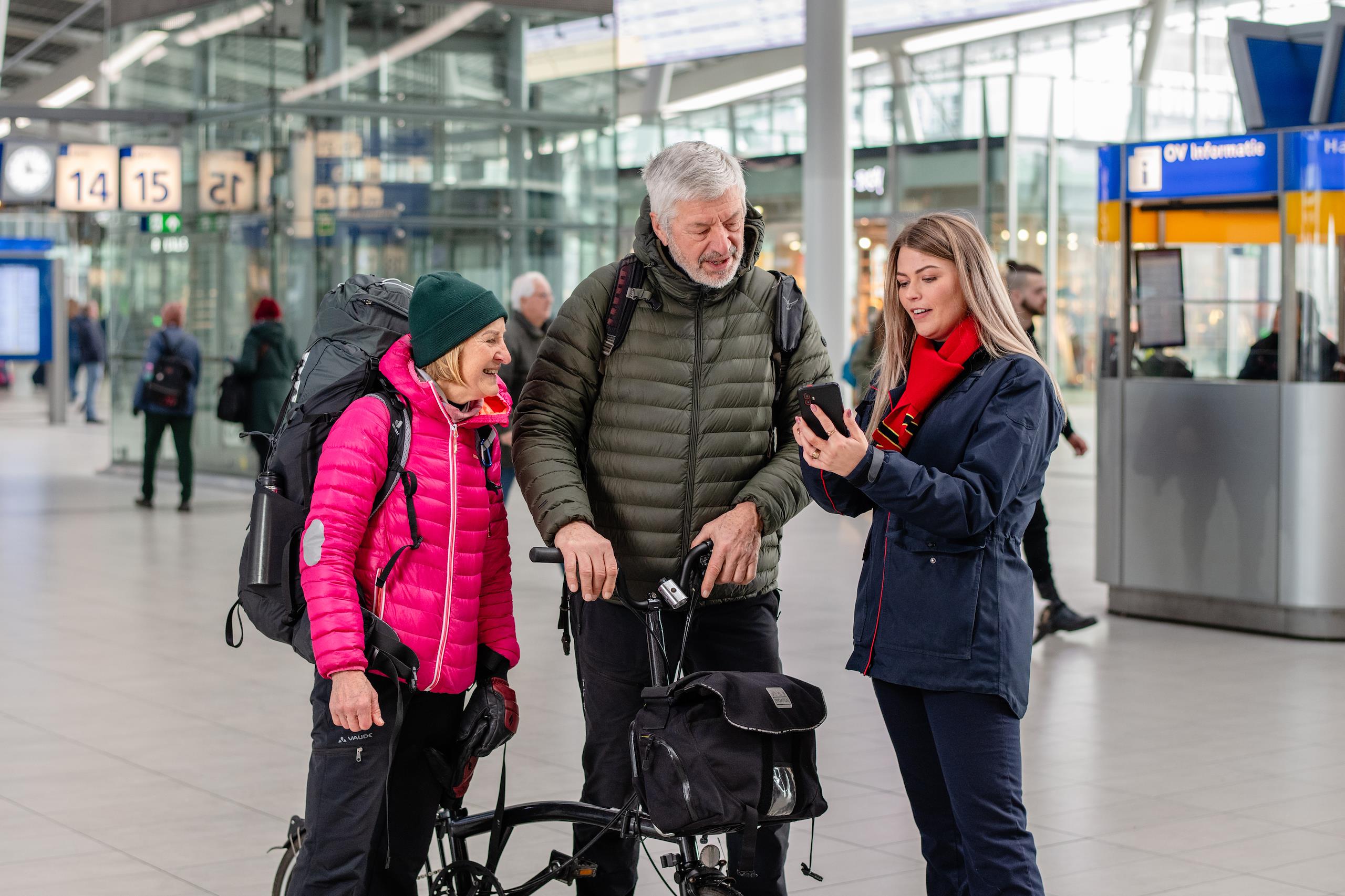
Every business faces dilemmas. NS is no exception. We give three examples from last year.
Youth Day Ticket: the choice between popularity and affordability
As our regular passengers know, there is nothing like exploring the Netherlands by train. And perhaps particularly so when you are young. That is why NS believes it is important that trains are also affordable for young people.
Hence the introduction of the Youth Day Ticket in 2020. The ticket was an immediate success. The target group, 12 to 17-year-olds, frequently used the ticket to travel throughout the Netherlands. And took much longer journeys than NS had expected. The Youth Day Ticket also cost NS a lot of money. Money that we could not afford, given NS's financial situation. At the same time, the Youth Day Ticket was not attractive to young people wanting to travel short distances.
We did not want to continue with the Youth Day Ticket, but we believed in the importance of keeping rail travel affordable for young people. Our solution: an alternative in the form of a free Dal Voordeel subscription for discounted off-peak travel, with NS covering the annual €71.40 subscription fee. The Dal Voordeel subscription gives young people a 40% discount during off-peak hours. For young people travelling short distances, this means lower costs than with the Youth Day Ticket. It is painful to pull the plug on a beloved product, but we could not justify the cost. The solution we have now chosen meets the needs of young people.
Safe versus welcoming: the introduction of the baton
In July, NS applied to the Ministry of Justice and Security for permission to carry out a trial that would involve temporarily equipping 75 Safety & Service employees with a baton.
Does carrying a short baton help Security & Service staff to work more effectively and safely? That is what we want to find out with the trial. Applying to the ministry for this trial was not something we took lightly. We want to be a company that welcomes everyone. Both at the station and on the train. Equipping colleagues with a defensive weapon is not particularly in keeping with a warm welcome. But at the same time, our Safety & Service colleagues are regularly faced with violence. This is difficult to reconcile with the resources and powers they have to do their jobs.
NS has already taken many measures such as the deployment of additional Safety & Service staff, bodycams and measures at stations. And we will continue this effort. Our colleagues have different views on whether or not they should carry a baton. The Ministry of Justice and Security granted permission for the baton trial in October. NS expects to start the trial in early 2026. We will undertake a comprehensive review of the trial and are interested to see the results.
IT issue: digital autonomy versus tendering rules
Trains, workshops and offices: at NS, almost everything runs on IT. Our systems need to be safe, reliable and affordable. We work with several external IT suppliers for this purpose.
There is a growing desire in the Netherlands and Europe for greater digital resilience and autonomy. How dependent do you want to be on big foreign technology companies, for example from the US? As a state-owned company and part of the Netherlands' critical infrastructure, this debate directly affects us. There is also evidence of a broader desire for greater independence, while almost all Dutch government bodies, companies and other organisations rely on large IT parties abroad.
The desire for independence is at odds with practice. NS is legally obliged to follow European procurement rules and cannot exclude suppliers merely because they are based outside Europe. Moreover, there is not yet a fully European option: European IT providers also rely on US parties for software and hardware. This means that it is current impossible to become less dependent.
One example is the European tender in 2025. This was a call for tenders for the management and hosting of a technical platform for running internal applications, such as for NS’s financial planning and for resources in train workshops.
This tender was won by Enterprise Services Nederland (ESN). This company is part of US-based DXC. ESN provides ‘non-mission-critical systems’ that are not used to process any personal or passenger data. But the choice raised questions: how does this fit in with the broader desire to become more digitally resilient?
Based on the current legislation and regulations, the requirements set by NS and the chosen award model, ESN is the rightful winner. We therefore have confidence in this supplier. At the same time, we want to become less dependent on parties outside Europe. We are cooperating with the government and other parties to make this happen. Digital strategic autonomy can only be achieved collectively and step by step as a sector and as a country.